Most cleaning business owners don’t think of themselves as marketers. They think of themselves as cleaners. And while that’s understandable, it’s also one of the main reasons many cleaning businesses stay small when they could grow.
The operators who build thriving cleaning companies in Australia aren’t necessarily better at cleaning than their competitors. They’re better at consistently putting themselves in front of the right people, at the right time, with the right message. That’s marketing and it doesn’t have to be complicated or expensive to work.
This guide covers the strategies that are actually producing results for cleaning businesses in 2026, with practical detail on how to apply each one.
Understand What Makes Cleaning Business Marketing Different
Before jumping into tactics, it’s worth understanding the specific dynamics at play.
Cleaning is a high-trust service. People are letting you into their homes or workplaces, and they’re handing over keys, access codes, and responsibility for their space. That means your marketing isn’t just about being visible, it’s about being trusted. Every piece of marketing you put out, consciously or not, is either building or undermining that trust.
Cleaning is also highly local. You’re not competing with businesses across Australia, you’re competing with the other cleaners in a handful of suburbs. That changes how you should approach visibility. You don’t need to reach everyone; you need to dominate a specific geographic area.
Keep both of those things in mind as you read through the strategies below.
1. Local SEO: The Long Game That Pays Off Consistently
Search engine optimization for a local cleaning business is not about gaming algorithms or technical tricks. It’s about making sure that when someone in your service area searches for a cleaner, your business appears.
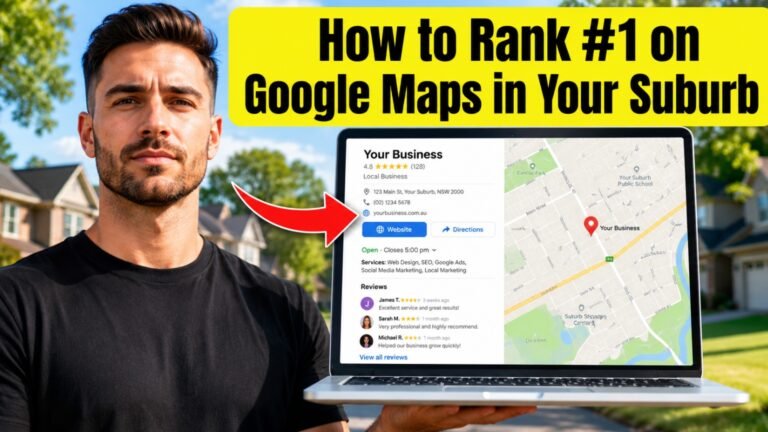
Google Business Profile is the foundation. This is the listing that appears in the map results when people search locally, and it’s where most cleaning enquiries originate for established businesses. Keep it updated, add new photos regularly, respond to every review, keep your service area and hours accurate, and add posts when you have something relevant to share.
Your website is the second pillar of local SEO. A well-structured website that covers your services and mentions your service areas will steadily build rankings over time. You don’t need dozens of pages but you do need clear pages for each service you offer, and you need to mention the specific suburbs you serve naturally throughout your content.
Reviews are the third element. Google uses them as a trust and quality signal. The more genuine, recent, positive reviews you have, the better you’ll rank and the more often people will choose you over competitors. Make asking for reviews a regular habit, not an afterthought.
Local SEO takes three to six months to show meaningful results, but once it’s working, it brings in enquiries without ongoing ad spend. For a service business built on recurring clients, that’s one of the best possible returns.
2. Google Ads: Fast Results When Done Properly
If local SEO is the long game, Google Ads is the short game. A well-structured ad campaign can put you at the top of search results within days and generate leads almost immediately.
The key word is “well-structured.” Poorly managed Google Ads campaigns waste money quickly. The most common mistakes cleaning businesses make with ads:
Being too broad: Running ads for generic terms without geographic targeting means paying for clicks from people outside your service area, or people who aren’t actually looking to hire right now.
Sending traffic to the wrong page: An ad that brings someone to your homepage, where they have to find the service they’re looking for, will convert far worse than an ad that brings them to a specific, clear page about exactly what they searched for.
Not tracking results: If you don’t know which ads are generating enquiries and which are wasting budget, you can’t improve the campaign.
Done right, Google Ads works well for cleaning businesses. The intent is high someone searching “end of lease cleaning [suburb]” is ready to book, not just browsing. Capture that intent with a targeted ad and a compelling, specific landing page.
3. Facebook and Instagram: Community Presence and Retargeting
Facebook is less effective for cold acquisition than it was a few years ago, but it still plays a useful role in a cleaning business’s marketing mix particularly in two ways.
Community groups: As mentioned in the client acquisition guide, Facebook groups for local suburbs and communities are active spaces where people ask for service recommendations. Being visible and helpful in these groups builds local reputation over time.
Retargeting: If someone visits your website but doesn’t enquire, a retargeting ad can bring them back. This is a lower-cost way to use paid social, because you’re only showing ads to people who’ve already shown interest. Combined with Google Ads or local SEO, it keeps your business top of mind during the decision-making period.
Instagram can work well for cleaning businesses that invest in before-and-after content. The visual nature of the platform suits this type of work, and a consistent stream of genuine results builds credibility. This requires more effort to maintain, but for operators willing to document their work, it can generate organic enquiries.
4. Before-and-After Content: Your Most Powerful Trust Builder
In a service business, seeing is believing. A potential client who can see what your work looks like before they commit is far more likely to book than one who has only read a description.
Before-and-after photos and short videos are the most effective content format for cleaning businesses. They require no special skills to produce just a phone camera and the habit of taking photos at the start and end of each job.
What to photograph:
- Kitchens before and after a deep clean
- Bathrooms transformed by end-of-lease cleaning
- Carpets before and after treatment
- Outdoor areas after pressure washing
- Oven interiors (one of the most striking transformations)
Share this content on your Google Business Profile, Instagram, Facebook page, and your website. It does multiple jobs at once: it demonstrates your quality, it builds trust, and it shows prospective clients what to expect.
You don’t need professional photography. Authentic images taken on a phone often perform better than polished commercial photos because they feel real.
5. Review Strategy: Turning Satisfied Clients Into Advocates
Reviews are one of the highest-leverage activities in cleaning business marketing. A business with a strong review profile consistently wins against competitors with a weaker one, even if the service quality is similar.
The challenge is that people need to be asked. Most satisfied clients won’t leave a review unless it’s easy and they’re reminded at the right moment.
A simple review process:
After each completed job, send a follow-up message by text or email thanking the client and asking if they’d be willing to leave a Google review. Include a direct link to your review page so they don’t have to search for it. Make the task warm and personal, not transactional.
For regular clients who’ve been with you a while, a more personal request via phone or in person often yields detailed, genuine reviews that carry more weight.
Responding to reviews: Reply to every review, positive and negative. For positive reviews, a brief, genuine thank you shows prospective clients that you’re engaged and professional. For negative reviews which will occasionally happen no matter how good your service is, a calm, professional response that acknowledges the concern and explains what steps you’ve taken demonstrates maturity and builds more trust than no response at all.
Never argue with a reviewer publicly, even if you believe the review is unfair.
6. Email Marketing: Keeping Clients Coming Back
Email is consistently underused by cleaning businesses. Most operators don’t collect email addresses systematically, and those who do rarely send anything.
This is a missed opportunity. Your existing clients are your best source of revenue they’ve already trusted you once, and keeping them engaged costs a fraction of what it takes to acquire a new client.
A simple email strategy for a cleaning business:
Seasonal reminders: “Spring is a great time for a deep clean if you’d like to book in for [month], spaces are filling up.” This prompts rebookings from clients who’ve lapsed or who weren’t on a regular schedule.
New service announcements: If you add carpet cleaning, pressure washing, or commercial services, let your existing clients know. Some of them will need exactly what you’ve just started offering.
Tips and helpful content: A short email with cleaning tips on how to maintain a kitchen between professional cleans, how to care for different flooring types positions you as an expert and keeps you top of mind without selling.
You don’t need to send emails constantly. A few well-timed messages per year can recover lapsed clients and generate additional bookings from your existing base.
7. Strategic Partnerships: Building Referral Networks
Some of the most consistent sources of cleaning work come not from direct marketing, but from professional relationships.
Real estate agents and property managers are the most obvious. They regularly need to arrange end-of-lease cleaning, and they often maintain a list of trusted trades they refer to landlords and tenants. Getting on that list requires persistence, reaching out, following up, and proving you’re reliable when they do send work your way.
Builders and renovation companies often need post-construction cleaning. This is specialised work that commands higher rates, and once you establish a relationship with a few builders, they’ll return to you for every project.
Short-term rental hosts on platforms like Airbnb need consistent, reliable turnaround cleaning between guests. A single host with multiple properties can provide substantial recurring work.
Corporate relocation companies sometimes coordinate cleaning for employees moving into new properties.
These partnerships don’t come quickly, and they require maintaining the relationship over time. But they’re valuable because they come with built-in trust and can generate significant volume without ongoing marketing spend.
8. Referral Programs: Systematising Word of Mouth
Word of mouth is powerful, but leaving it entirely to chance means you’re not fully leveraging your happiest clients. A simple referral program turns passive satisfaction into active advocacy.
The concept is straightforward: offer your existing clients a benefit, a discount on their next clean, a free add-on, or a gift card for each new client they refer who books a job.
Keep it simple and easy to understand. “Refer a friend and get [benefit] on your next clean” is clear. Complicated reward structures confuse people and reduce participation.
Promote your referral program when clients are at their happiest right after a job they’re particularly pleased with. That’s the moment to mention it naturally.
9. Letterbox Drops: Still Relevant in the Right Areas
Physical marketing in the form of letterbox drops is less fashionable than digital marketing, but for local residential cleaning businesses, it can still produce results.
The key is targeting. A mass letterbox drop across an entire suburb is expensive and inefficient. A targeted drop in specific streets or complexes where you’ve already done work or where you know there’s demand is a different proposition.
When you complete a job in a street, dropping flyers at nearby homes that same day is efficient and contextually relevant. You’re already there, which reduces cost and effort, and neighbours seeing a cleaner’s van outside a nearby house is a natural prompt to think about their own cleaning needs.
The design of your materials matters. A professional, clean design with clear information and a specific offer performs better than something generic.
10. Measure What’s Working and Adjust
Marketing that doesn’t get measured doesn’t improve. The most important habit for a growing cleaning business is asking new clients or tracking, if your booking system allows it, how they found you.
Over time, this data tells you which channels are delivering results and which are not. It lets you invest more in what’s working and stop spending on what isn’t.
You don’t need sophisticated analytics for this. A simple spreadsheet tracking where each new client came from is enough to make better decisions over time.
11. Dedicated Suburb Pages: The Local SEO Multiplier
One of the highest-performing local SEO strategies for cleaning businesses is creating dedicated service pages for the specific suburbs and areas you serve.
Most cleaning companies make the mistake of listing all their locations on a single generic page. The businesses that dominate local search results in 2026 are far more specific.
Instead of one broad “Service Areas” page, create individual pages such as:
- House Cleaning in Bondi
- End of Lease Cleaning in Parramatta
- Office Cleaning in Melbourne CBD
- Carpet Cleaning in Surry Hills
These pages allow your business to appear for highly targeted local searches from people who are actively looking for a cleaner in their exact area.
They also help Google understand:
- where you operate,
- which services you provide in each suburb,
- and which searches your business is most relevant for.
The key is making each page genuinely useful and locally relevant, not simply duplicating the same text with a suburb name swapped out.
Strong suburb pages often include:
- the specific services offered in that area,
- common property types in the suburb,
- local testimonials,
- before-and-after photos from nearby jobs,
- FAQs relevant to local clients,
- and clear contact or booking information.
For cleaning businesses competing in crowded metro areas, dedicated suburb pages can become one of the most consistent sources of long-term organic enquiries.
12: Optimise for AI Search and Voice Queries
Search behaviour is changing rapidly in 2026.
More people are now using conversational searches through AI assistants, voice search, and Google’s AI-generated summaries instead of typing short keyword phrases into search engines.
Instead of searching:
“cleaner Sydney”
people increasingly search in natural language:
“Who’s the best end of lease cleaner near me with good reviews?”
“What does a deep clean cost in Melbourne?”
“Which cleaning company is reliable for weekly office cleaning?”
This shift means cleaning businesses need to structure their websites and content differently.
Google and AI-powered search systems favour businesses that provide:
- clear answers,
- trustworthy reviews,
- detailed service information,
- and strong local authority signals.
Some practical ways to optimise for AI and voice search include:
- Adding FAQ sections written in natural language
- Using clear headings and structured service pages
- Publishing helpful educational content
- Maintaining a strong volume of recent reviews
- Keeping your Google Business Profile updated
- Using conversational wording throughout your website
Review sentiment is becoming increasingly important as well. AI systems analyse not just star ratings, but the actual language people use in reviews to determine trust and service quality.
Businesses with detailed, authentic reviews and consistent online activity are more likely to appear in AI-generated recommendations and local search summaries.
For cleaning companies looking to stay competitive over the next few years, adapting to AI-driven search is quickly becoming as important as traditional SEO itself.
Putting It Together: A Realistic Marketing Approach for 2026
You don’t need to do all of these at once. In fact, trying to do everything simultaneously is usually less effective than doing a few things well.
A sensible approach for a growing cleaning business:
In the first three months: Set up and optimize your Google Business Profile. Ask every client for a review. Join local Facebook groups and be active in them. Build a simple website if you don’t have one.
From three to six months: Consider running a targeted Google Ads campaign if you have the budget. Start systematically collecting email addresses. Build relationships with real estate agents in your area. Photograph your work consistently.
Ongoing: Keep your Google Business Profile active. Continue requesting reviews. Send occasional emails to your client list. Track where new clients are coming from and invest more in what’s working.
Marketing a cleaning business is not about being clever. It’s about showing up consistently, building trust over time, and making it easy for people to find you and choose you. The businesses that do this well don’t need to rely on price to compete, they compete on reputation, and reputation is built one client at a time.
Ready to Grow Your Cleaning Business?
The cleaning companies that consistently win more clients in 2026 aren’t necessarily the cheapest or the biggest they’re the ones that stay visible, build trust, and market consistently.
You don’t need complicated funnels or massive ad budgets to grow. You need a strategy that helps local clients find you, trust you, and book with confidence.
If you want help improving your local SEO, Google Ads, website, or overall marketing strategy for your cleaning business, now is the time to start building momentum before your competitors do.
The sooner you invest in visibility, the sooner your business stops relying solely on referrals and starts generating predictable enquiries every month.