If you’ve ever searched for “bakery near me” or “electrician open now” and clicked on one of the first few results, you’ve experienced local SEO from the customer’s side. Now imagine being the bakery or the electrician that showed up. That’s the goal, and it’s a lot more achievable than most business owners think.
Local SEO simply means making sure your business shows up when people nearby search for what you offer. It’s different from general SEO because it’s tied to location, your suburb, your city, your service area, rather than trying to rank nationally or globally.
For most small and medium businesses in Australia, local SEO is far more valuable than chasing broad national rankings. A plumber in Newcastle doesn’t need to rank for “best plumber Australia.” They need to show up when someone in Newcastle or nearby suburbs searches for a plumber right now.
Why Local SEO Matters More Than Ever in 2026
Search behaviour has shifted a lot over the past few years. More people are searching with full questions rather than short keywords, things like “is there a vet open on Sunday near me” instead of just “vet.” Voice search through phones and smart speakers has made this even more common.
Google has also gotten much better at understanding context, location, and intent. This means businesses that provide clear, accurate, and genuinely helpful information, rather than vague marketing language, tend to do better. The businesses that struggle are usually the ones with outdated information, inconsistent details across the web, or websites that feel more like brochures than helpful resources.
The Three Pillars of Local SEO
There’s a lot of technical detail you can get lost in, but local SEO really comes down to three things working together.
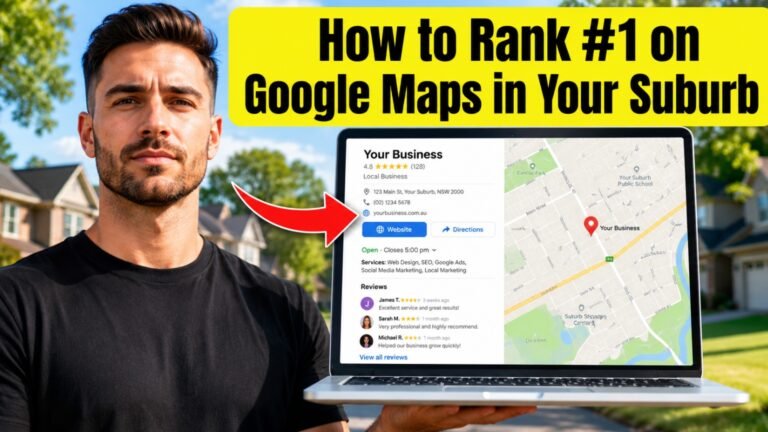
Your Google Business Profile is often the first thing a potential customer sees. It shows your location on the map, your hours, your reviews, your photos, and a summary of what you do. Keeping this accurate and active is the foundation everything else builds on.
Your website needs to clearly state what you do, where you do it, and why someone should choose you. This sounds obvious, but a surprising number of business websites never actually say which suburbs or areas they serve, which makes it harder for both Google and customers to understand if you’re relevant to them.
Trust signals include reviews, mentions on other websites, consistent business information across directories, and content that shows real expertise. These signals build up over time and tell Google (and customers) that your business is established, legitimate, and worth recommending.
Common Mistakes Australian Business Owners Make
One of the most common issues is having multiple versions of your business address floating around online, maybe an old address from when you moved premises a few years ago, or a slightly different format on different directories. These inconsistencies create confusion for Google about which information is correct and current.
Another common mistake is treating the website as something that only needs updating when there’s a sale or a new product. Search engines favour businesses that show ongoing activity and relevance. A site that hasn’t been touched in two years, even if the business itself is thriving, can send the wrong signal.
Many businesses also focus heavily on their home suburb but completely ignore the surrounding areas they actually serve. If you’re a mobile dog groomer covering several suburbs, your website should mention those areas naturally, not just the one where you happen to be based.
How Google Search Console Fits Into the Picture
Google Search Console is a free tool from Google that shows you how your website is actually performing in search, what people are searching for when they find you, which pages are being shown, and whether there are any technical issues stopping pages from appearing properly.
For beginners, the most useful thing to do is simply check it regularly. Look at which search terms are bringing people to your site. Often, you’ll discover that people are finding you for searches you never specifically targeted, which can give you ideas for new content or services to highlight.
It also flags issues like pages that aren’t being indexed, or mobile usability problems. These might sound technical, but fixing them often has a noticeable impact on how often your business appears in search results.
Local SEO Is a Long Game, and That’s Okay
If there’s one thing every business owner should know going in, it’s that local SEO doesn’t produce overnight results, and that’s actually a good sign. Search engines are designed to reward consistency and genuine quality over time, which means once you build a strong local presence, it tends to be stable and durable, not the kind of thing that disappears the moment you stop paying for ads.
Think of it less like a marketing campaign and more like building a reputation in your neighbourhood. The plumber who’s been reliable for years doesn’t need to shout about it, people already know, recommend them, and search for them by name. Local SEO is simply the digital version of that same reputation, built steadily, suburb by suburb, search by search.