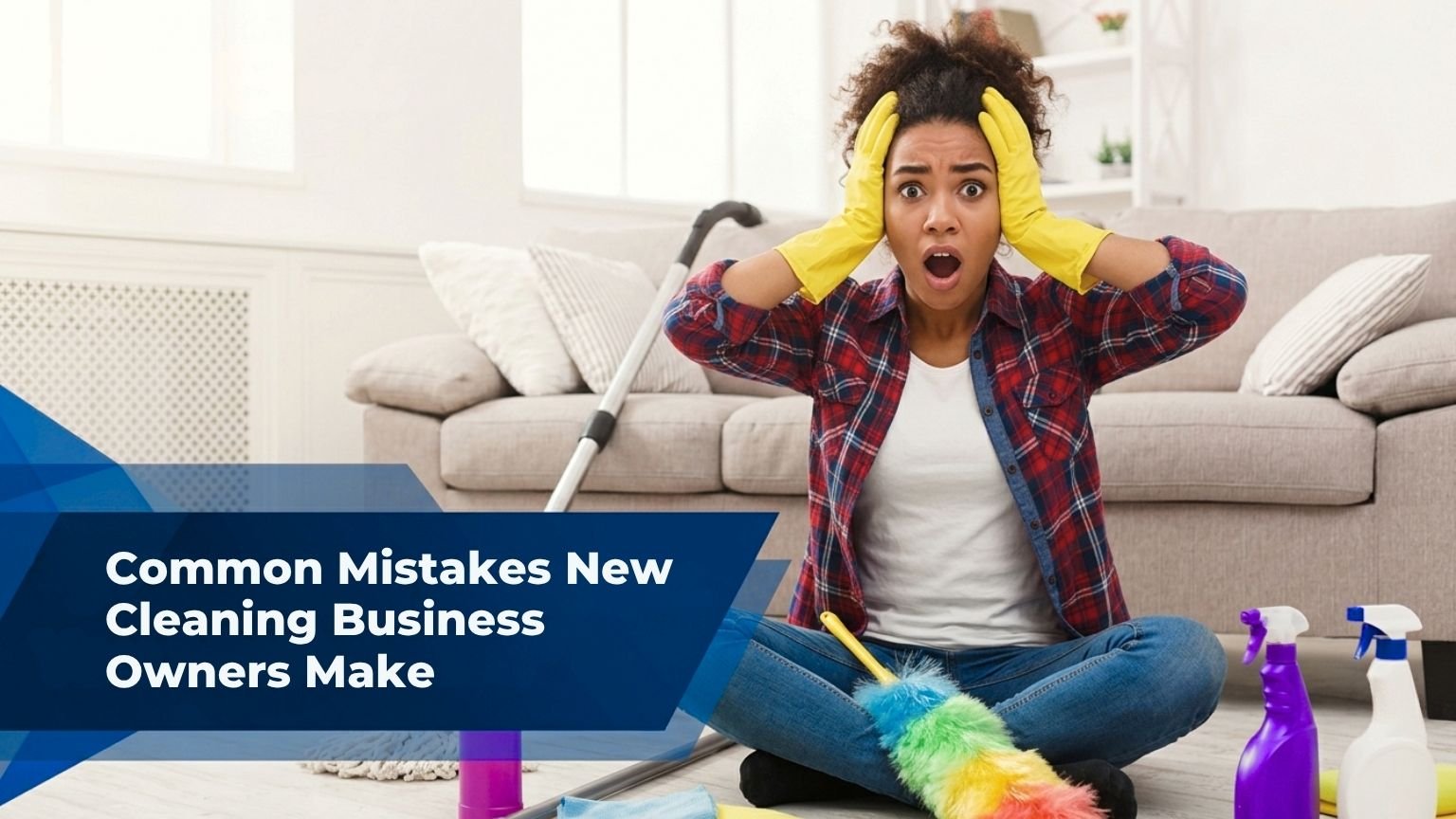
Starting a cleaning business looks simple from the outside. You need some products, a reliable car, a willingness to work hard, and a few clients to get started. And in some ways, it really is that accessible, which is part of why so many people give it a go. However, many Cleaning Business Owners quickly realize that long-term success also depends on strong customer service, time management, and consistent quality.
But there’s a difference between starting a cleaning business and building one that actually lasts. The gap between the two is usually filled with a handful of very common, very avoidable mistakes.
If you’re in the early stages of your cleaning business or you’ve been going for a little while and things aren’t quite where you hoped, this is for you. Not judgment. Just honest observations from the patterns that show up again and again.
Mistake 1: Treating It Like a Job Instead of a Business
This is the big one. A lot of people start cleaning businesses because they want to be their own boss and escape the nine-to-five. Completely understandable. But then they start operating like an employee just working the hours, doing the cleans, and collecting the cash.
The problem is that a business needs to be managed, not just worked. That means tracking your income and expenses properly. It means having a system for getting new clients, not just hoping referrals come in. It means thinking about where you want to be in two or three years and making decisions that move you toward that.
If you’re spending every hour either cleaning or recovering from cleaning, with no time left over to actually work on the business, you’ve essentially created a job and one with no sick leave, no super, and no one to cover you when you need a day off.
Even setting aside a few hours a week for business tasks admin, marketing, planning, tracking your numbers makes a real difference over time.
Mistake 2: Not Getting the Basics Right from Day One
It’s tempting to keep things casual at the start. A few clients, cash in hand, no fuss. But skipping the legal and financial basics early on creates problems that are much harder to fix later.
The essentials for a legitimate cleaning business in Australia include:
ABN registration. If you’re operating as a business, you need one. It’s free and straightforward through the Australian Business Register.
Public liability insurance. This is non-negotiable. You’re going into people’s homes. If something gets damaged, a glass ornament knocked off a shelf, a floor scratched by equipment, anything you need to be covered. Clients in Sydney increasingly ask to see proof of insurance before booking, especially for regular work.
Proper invoicing and record-keeping. Even if you’re not GST-registered yet, keeping clean financial records from day one makes tax time easier and gives you a real picture of whether your business is actually profitable.
Understanding your tax obligations. Talk to an accountant early. What you need to put aside, how to handle GST if and when you hit the threshold, what you can claim these things matter more than most new business owners realise.
Getting these foundations right isn’t bureaucracy for its own sake. It protects you, it makes you look professional to clients, and it means you can grow without scrambling to sort out paperwork later.
Mistake 3: Undercharging Because of Fear
Fear of losing clients before you even have them is one of the main reasons new cleaning business owners price their services too low. The thinking goes: if I charge less than everyone else, more people will choose me.
In reality, very low prices often signal low quality to potential clients especially in residential cleaning, where you’re entering someone’s private space. People aren’t always looking for the cheapest option. They’re looking for someone they can trust to do a good job consistently.
Undercharging also means you’re working harder for less. The math catches up with you eventually, usually in the form of exhaustion, resentment, or just running out of money despite being constantly busy.
Calculate what you actually need to earn to cover your costs, pay yourself a fair wage, and have a bit left over to reinvest in the business. Then charge based on that number, not based on fear.
Mistake 4: Taking Every Client Who Calls
When you’re starting out and every booking feels like a win, it’s natural to say yes to everything. But not every client is a good client, and learning to recognise the signs early saves you a lot of grief.
Red flags to watch for when a potential client contacts you:
- They push hard on price before they’ve even seen your services
- They’re vague about what they want but have a long list of complaints about their last cleaner
- They want you to start immediately with no time for a proper quote
- They ask for extras outside your scope of service at the last minute
- They seem disorganised or difficult to communicate with during the booking process
None of these are definitive, but they’re worth paying attention to. Difficult clients take up more of your time, leave bad reviews even when you’ve done your best, and drain your energy.
As your business grows, you’ll get better at reading these signals. In the meantime, it’s okay to have minimum job requirements, a clear scope of service, and the quiet confidence to turn down work that doesn’t fit.
Mistake 5: No System for Getting Reviews and Referrals
Word of mouth is the most powerful marketing tool for local cleaning businesses. But most cleaners leave it entirely to chance hoping happy clients will spontaneously tell their friends or leave a Google review.
Happy clients often mean to do these things and just forget. A simple, friendly nudge goes a long way.
After completing a job you’re proud of, follow up with your client. Ask if they were happy with the clean. If they say yes, let them know that reviews and referrals genuinely help your small business grow. Most clients who are happy will help, they just need to be asked.
A Google Business Profile is worth setting up early. It’s free, it puts you on the map in local searches, and reviews there have real weight in how Google ranks local service businesses. If you don’t have one yet, that’s a practical action you can take today.
Mistake 6: Inconsistent Quality
This one is quietly devastating. Clients don’t usually tell you when something wasn’t quite right they just don’t rebook. Or they send a polite message saying they’re “going in a different direction.”
Consistency is the whole game in cleaning. It’s what separates businesses that grow from ones that stay stuck constantly replacing clients. When a client books you again and again, they’re saying they trust you to deliver the same standard every time.
The way to protect consistency:
- Use a checklist for every clean, not just when you’re new
- If you have staff, make sure they’re trained on your standards, not just the general idea of cleaning
- Do occasional quality checks either yourself or ask a trusted client for honest feedback
- When you have an off day (everyone does), acknowledge it and make it right
Building a reputation for reliability and consistent quality is worth more than any advertising you could do.
Mistake 7: Ignoring the Admin Side
It might not be the fun part, but the admin side of a cleaning business matters more than many owners realise especially as you grow.
Keeping track of client details, booking history, and schedules in your head (or a chaotic spreadsheet) works fine for a few clients. It breaks down when you’re managing a full week of bookings, multiple staff members, and clients with different preferences and requirements.
Basic tools that make a real difference:
- A simple booking system so you’re not double-booking or losing track of appointments
- An invoicing tool so you get paid on time and have a clear record
- A way to store client notes things like preferred access instructions, pets in the house, areas they want extra attention on
You don’t need expensive software. There are plenty of affordable tools designed for small service businesses. The point is to have systems, not to rely on memory.
Mistake 8: Not Investing in Yourself
The practical skills of cleaning are one part of running a cleaning business. Business knowledge marketing, pricing, managing clients, managing staff, understanding your finances is another part entirely, and it’s one that many operators never properly develop.
This doesn’t mean you need a formal qualification. But it does mean staying curious. Reading about how other service businesses operate. Connecting with other cleaning business owners (not just to compare notes but to build a support network). Understanding enough about marketing to know how your clients are finding you and what you can do to reach more of the right ones.
The cleaning business owners who build something lasting aren’t just good at cleaning. They’re good at running a business. That second set of skills is learnable, and it compounds over time.
One Last Thing
Starting a cleaning business is genuinely achievable. Plenty of people across Sydney and NSW have built solid, profitable cleaning operations from scratch. But they didn’t do it by accident, they did it by taking the business side as seriously as the actual work.
The mistakes in this list aren’t failures. They’re things most people go through, learn from, and correct. The advantage of reading about them now is that you can skip some of the harder lessons and get to the good part faster.
Find more practical guides for running a cleaning business in NSW at nswbusinesstoday.com