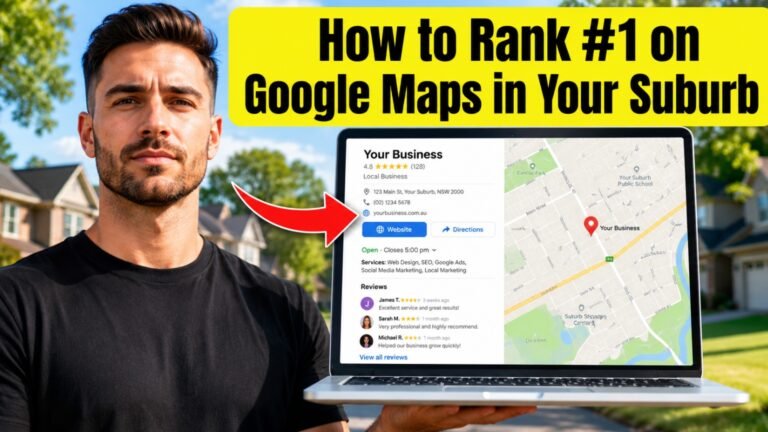
If you run a local business in Australia, whether that’s a cafe in Newcastle, an electrician in Western Sydney, or a hair salon on the Gold Coast, local SEO is one of the most important things you can invest your time in. It’s how nearby customers find you when they search for what you offer, and unlike paid ads, the effort you put in keeps paying off over time.
Search has changed quite a bit, and Google is now factoring in things like how engaged people are with your profile, how consistent your information is across the web, and how genuinely useful your website content is. Here’s a practical checklist to help you cover the basics and beyond.
1. Claim and Fully Complete Your Google Business Profile
This is still the single biggest factor in local search rankings, and it’s the first place most customers look. Go through every section of your profile and fill it in properly:
- Business name (exactly as it appears on your signage and website, don’t stuff keywords into it)
- Correct address and service area
- Accurate phone number and website link
- Business hours, including public holiday hours
- The right primary category, plus relevant secondary categories
- A clear, helpful business description
Don’t set this up once and walk away. Profiles that are regularly updated with photos, posts, and responses tend to perform noticeably better than profiles that sit untouched.
2. Get Your NAP Consistent Everywhere
NAP stands for Name, Address, and Phone number. Search engines cross-check this information across your website, your Google Business Profile, social media pages, and any online directories you’re listed in (like True Local, Yellow Pages, or industry-specific directories).
If your address is written differently in different places, like “St” versus “Street”, or an old phone number is still floating around on an old directory listing, it can quietly hurt your visibility. Do a search for your business name and go through the results, updating anything that’s outdated or inconsistent.
3. Build a Steady Stream of Reviews
Reviews are one of the strongest trust signals for both customers and search engines. The goal isn’t to chase a huge number all at once, it’s to build a steady, natural pattern of new reviews coming in over time.
A simple approach that works well: after you complete a job, finish a service, or a customer picks up an order, ask them directly if they’d be willing to leave a quick review. Make it easy by having a direct link ready to share via text or email.
Always respond to reviews, both positive and negative. A thoughtful reply to a negative review often does more for your reputation than the review itself does damage, because it shows future customers how you handle problems.
4. Create Location-Specific Pages (If You Serve Multiple Areas)
If your business serves more than one suburb, city, or region, generic “we service everywhere” pages don’t perform well anymore. Instead, create a dedicated page for each major area you serve, with content that’s actually relevant to that location.
For example, a pest control business in Brisbane might have separate pages for “Pest Control Ipswich” and “Pest Control Logan”, each mentioning local landmarks, common local pest issues, and any area-specific information. This helps search engines understand exactly where you operate and helps customers feel like the page was written for them.
5. Make Sure Your Website Works Well on Mobile
The majority of local searches happen on phones, often when someone is out and about, deciding where to go or who to call right now. If your website is slow to load, hard to navigate, or has tiny text that’s difficult to tap, you’ll lose those visitors quickly.
Test your site on your own phone. Can you find your phone number and address within a few seconds? Is the “Call Now” or “Book Now” button easy to tap? Does everything load quickly on mobile data, not just on fast wifi?
6. Write Content That Answers Real Local Questions
Think about the questions your customers actually ask, both before they contact you and during the job itself. A local locksmith might write about what to do if you’re locked out late at night, or how to tell if your locks need upgrading. A cafe might write about the best spots nearby for outdoor seating, or what’s in season on the menu this month.
This kind of content does two things. It helps you show up when people search for these specific questions, and it builds trust because it shows you genuinely know your stuff and care about helping, not just selling.
7. Use Schema Markup on Your Website
Schema markup is a bit of code added to your website that helps search engines understand exactly what your business is, where it’s located, what services you offer, and what your reviews look like. It doesn’t change how your site looks to visitors, but it can help your listing stand out in search results with extra details like star ratings or opening hours displayed directly.
If you’re using a platform like WordPress, there are plugins that can add basic local business schema without needing to touch any code. If your developer set up your site, it’s worth asking them to check this is in place.
8. Build Local Backlinks
Backlinks are links from other websites pointing to yours, and they remain an important trust signal. For local businesses, the most valuable backlinks often come from other local sources: your local chamber of commerce, community news sites, local business directories, sponsorships of community events, or partnerships with other nearby businesses.
These kinds of links tell search engines that your business is a genuine, recognised part of the local community, which carries real weight.
9. Keep an Eye on Your Google Search Console Data
Google Search Console shows you which search terms are bringing people to your website and which pages are performing well or poorly. Checking this regularly helps you spot patterns, like discovering that people are finding your plumbing business by searching for “emergency hot water repair”, which might be worth its own dedicated page if you don’t already have one.
It also flags technical issues, like pages that aren’t being indexed properly, which is worth checking every so often even if everything seems fine on the surface.
10. Be Consistent with Posting and Updates
Local search increasingly rewards businesses that show ongoing activity rather than a “set and forget” approach. This includes posting updates to your Google Business Profile, adding new photos, publishing the occasional blog post, and keeping your social media active.
You don’t need to post every day. What matters more is that there’s a visible, ongoing presence that shows your business is active, current, and genuinely operating, not just an old listing that hasn’t been touched in years.
Final Thoughts
Local SEO isn’t a one-off project you finish and tick off. It’s more like maintaining a shopfront, you keep it tidy, keep the window display fresh, and make sure people walking past can see you’re open and welcoming. The businesses that do well are usually the ones that consistently show up, respond to their customers, and provide genuinely helpful information.
If you can work through this checklist over the next few weeks, even just spending a little time on each item, you’ll likely notice a real difference in how often your business shows up when local customers are searching for what you offer.